
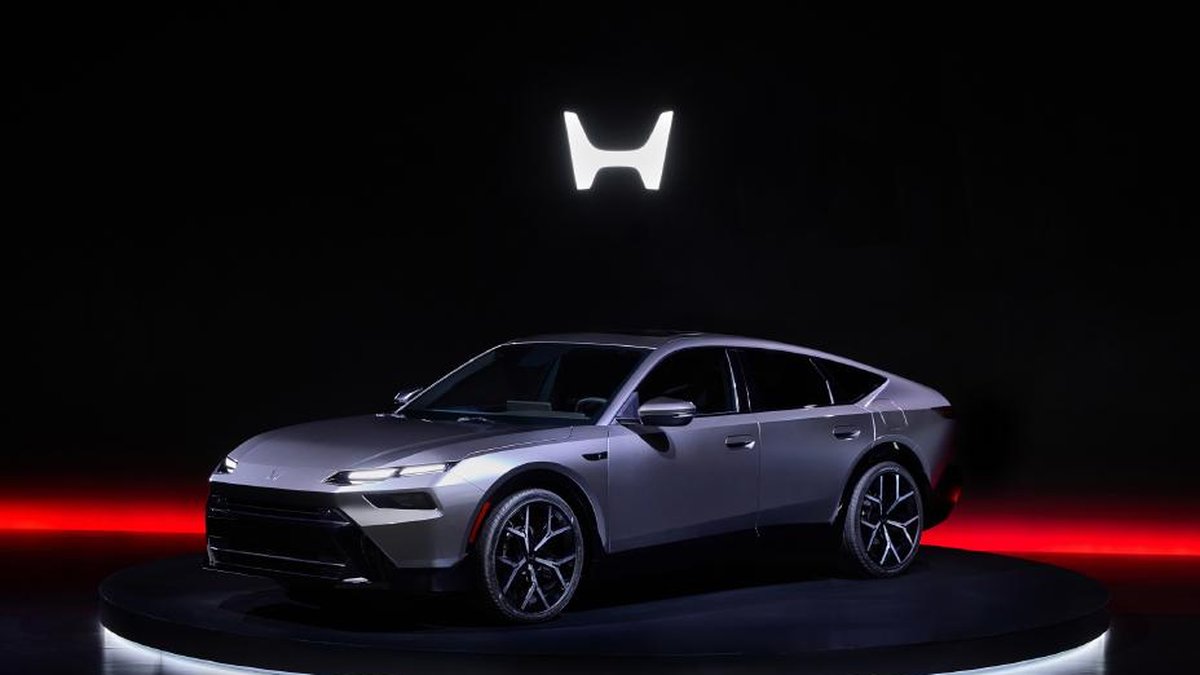
Honda used a global business briefing in Japan today to confirm 15 new hybrid models by 2030, most of them bound for North America, and to preview a sedan prototype that will arrive on a new platform in 2027. The company is reallocating development and production resources to hybrids ahead of its original schedule, a pivot that CEO Toshihiro Mibe framed as addressing environmental challenges where Honda has technical strengths.
The cost move is the news. Honda is striving to cut the price of its next-generation hybrid system by more than 30 percent compared to the system introduced in 2023, while improving fuel economy by more than 10 percent through platform changes and a new electric AWD unit. Those are the numbers that determine whether Honda can put hybrids into volume models at prices that do not strand buyers who have been cross-shopping the Accord Hybrid against the Toyota Camry. The 2026 Accord Hybrid Sport starts at $33,795 including destination.
The sedan prototype shown today previews the first model on that new platform and hybrid system, both launching in 2027. Honda did not name the model or confirm pricing. The new electric AWD unit promises precise motor control, which is Honda language for trying to preserve some version of the brand’s traditional driving feel in a powertrain architecture that could otherwise default to numb.
The production commitment is specific. Honda will make all of its North American auto plants capable of producing hybrid models, with increased hybrid output confirmed for the Marysville and East Liberty plants. Large D-Segment hybrid models are coming in 2029, which positions Honda to compete in the full-size sedan and SUV segments with a powertrain other than gas or the Prologue’s battery-electric setup.
Honda also previewed a next-generation ADAS system planned for 2028 that will handle acceleration and steering on both highways and surface streets from start to destination, based on navigation input. The company is positioning the combination of hybrid powertrain and advanced driver assistance as a way to preserve driving engagement while offering stress-free commuting. Whether that framing holds up when the system arrives depends on how much actual driver control the assist mode allows.
The briefing did not address what happens to the Prologue, Honda’s all-electric SUV that represented nearly a third of the brand’s electrified vehicle sales in 2025 alongside hybrid versions of the Accord, CR-V, Civic, and Prelude. Fifteen new hybrids by 2030 is a clear priority shift. If you have been waiting for Honda to commit to a powertrain strategy that does not require a charging network, the company just gave you the calendar.
Source: Honda. Images courtesy of Honda.