
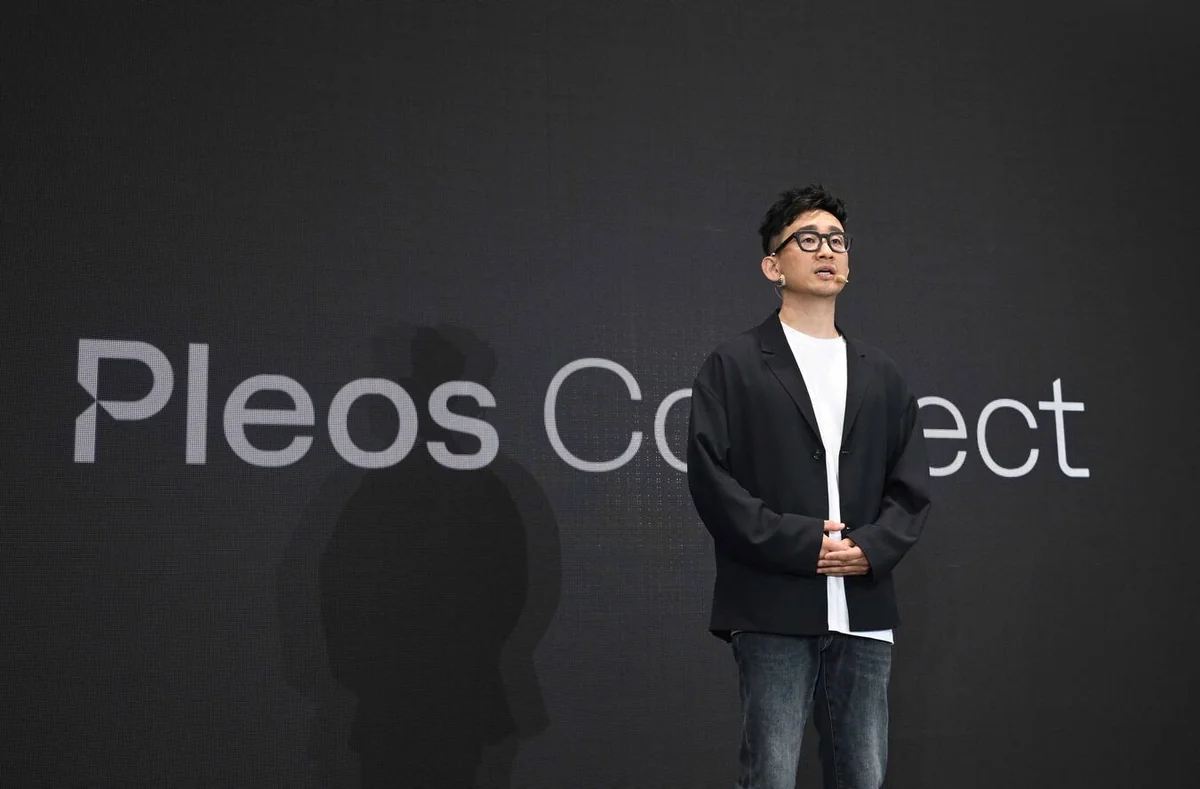
Hyundai Motor Group’s Pleos Connect infotainment system launches this May on the new GRANDEUR in Korea, with rollout expanding to the IONIQ 3 in Europe and a global deployment target of 20 million vehicles by 2030. The system is the first production deliverable of Hyundai’s pivot to software-defined vehicle architecture.
The timing lands Hyundai in the infotainment arms race alongside Tesla, Mercedes-Benz, BMW, and Volkswagen, all attempting to integrate AI voice assistants and over-the-air updates into their fleets. The global automotive infotainment market expanded from USD 17.10 billion in 2024 to USD 18.86 billion in 2025, with a projected CAGR of 10.95% through 2032.
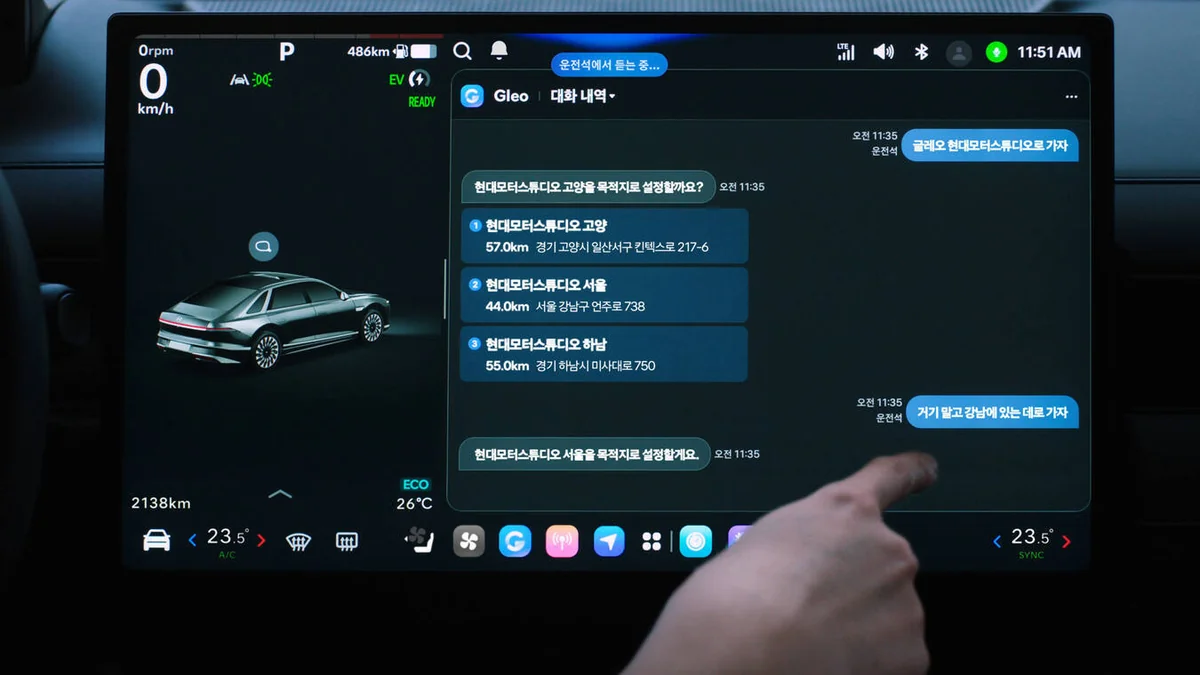
Pleos Connect centers on Gleo AI, a large-language-model voice assistant that handles vehicle controls, navigation, and web searches through conversational commands. The system can process multiple requests in a single voice input and recognize which passenger is speaking to execute zone-specific commands like heated seat activation. Hyundai plans to expand Gleo AI into third-party app integration and personalized services post-launch.
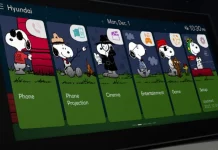
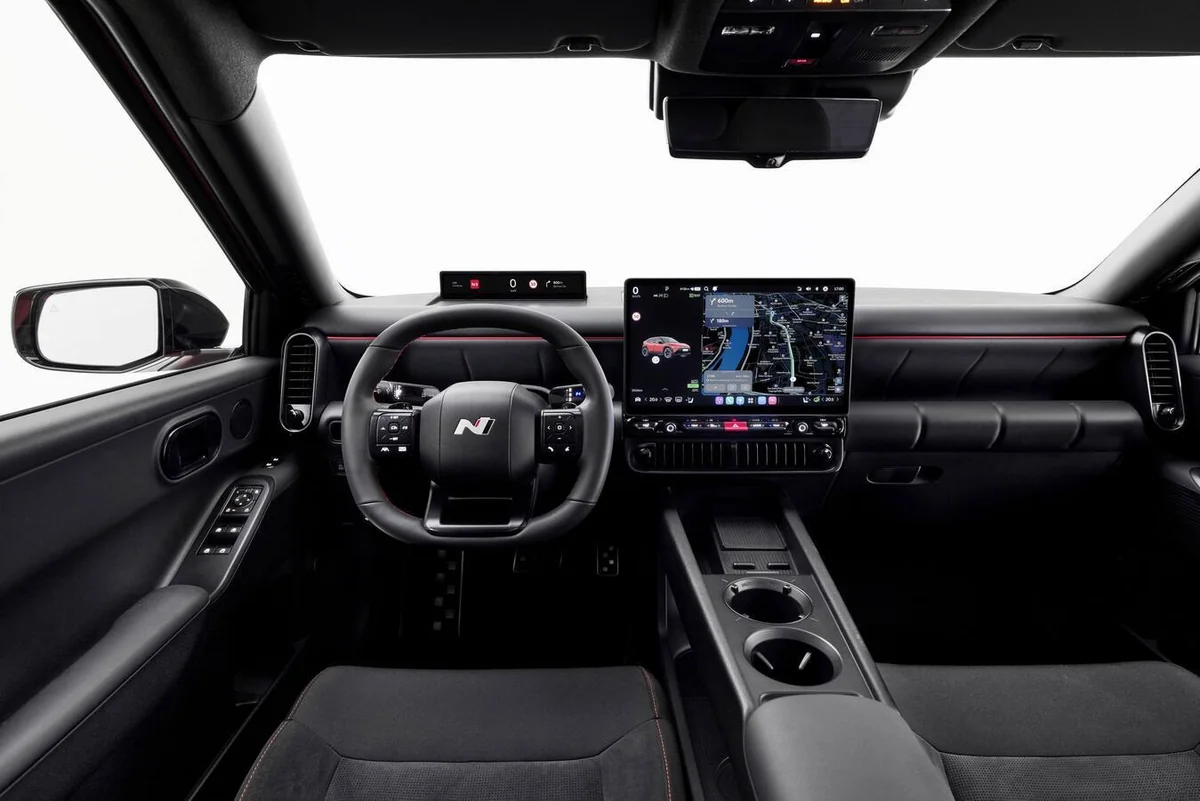
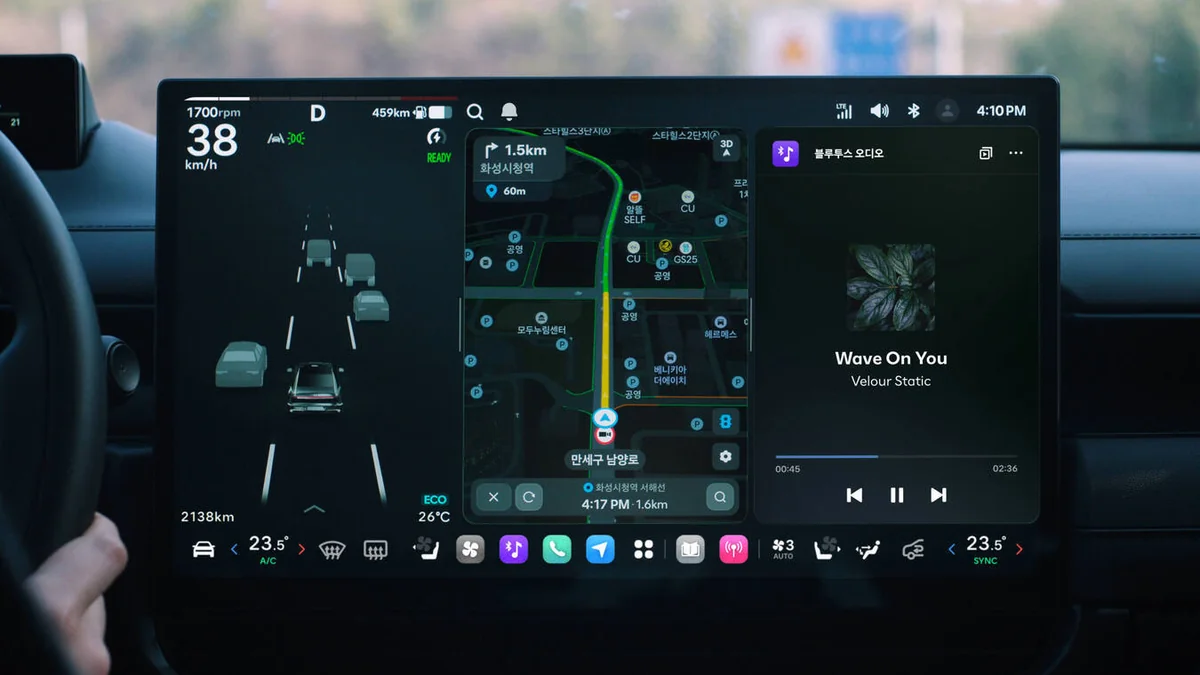
The interface splits between a large central widescreen and a slim forward display positioned in the driver’s line of sight. Physical buttons remain on the steering wheel and below the central screen. A three-finger gesture closes apps or repositions windows. The navigation system uses real-time traffic data and online maps, with a modular layout that allows simultaneous app operation on the main display.
The App Market opens the platform to third-party developers, with launch partners including NAVER, YouTube, Spotify, essential, and genie. Hyundai’s collaboration roster for the broader ecosystem includes Google, Uber, Samsung, SOCAR, and Unity. In August 2021, Hyundai selected QT as its human-machine interface technology partner for all three brands.
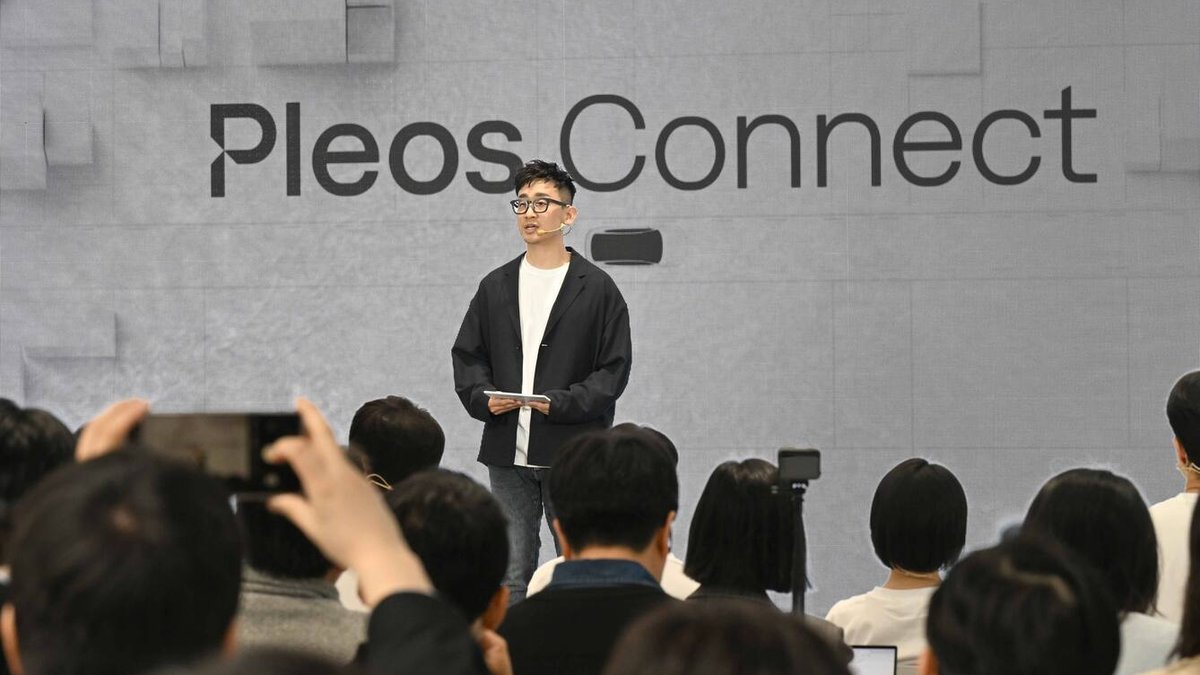
The 20 million vehicle target through 2030 represents Hyundai’s scale ambition, though the company has not disclosed subscription pricing, OTA update frequency, or backward compatibility for current-generation vehicles. The system debuted at UX Studio Seoul on April 29 as the production version of a concept shown at the Pleos 25 developer conference in 2025.
Whether buyers value Gleo AI over established voice assistants from Apple, Google, and Amazon depends on execution at launch. Hyundai is betting that an open developer platform and LLM-powered conversational interface will differentiate Pleos Connect in a segment where most automakers are still licensing their software stack from suppliers. The 2030 deadline gives Hyundai four years to prove the bet was worth making in-house.
Source: Kia. Images courtesy of Kia.